VILLAGE PROFILE
PROFILE OF PARTUNGKO NAGINJANG VILLAGE
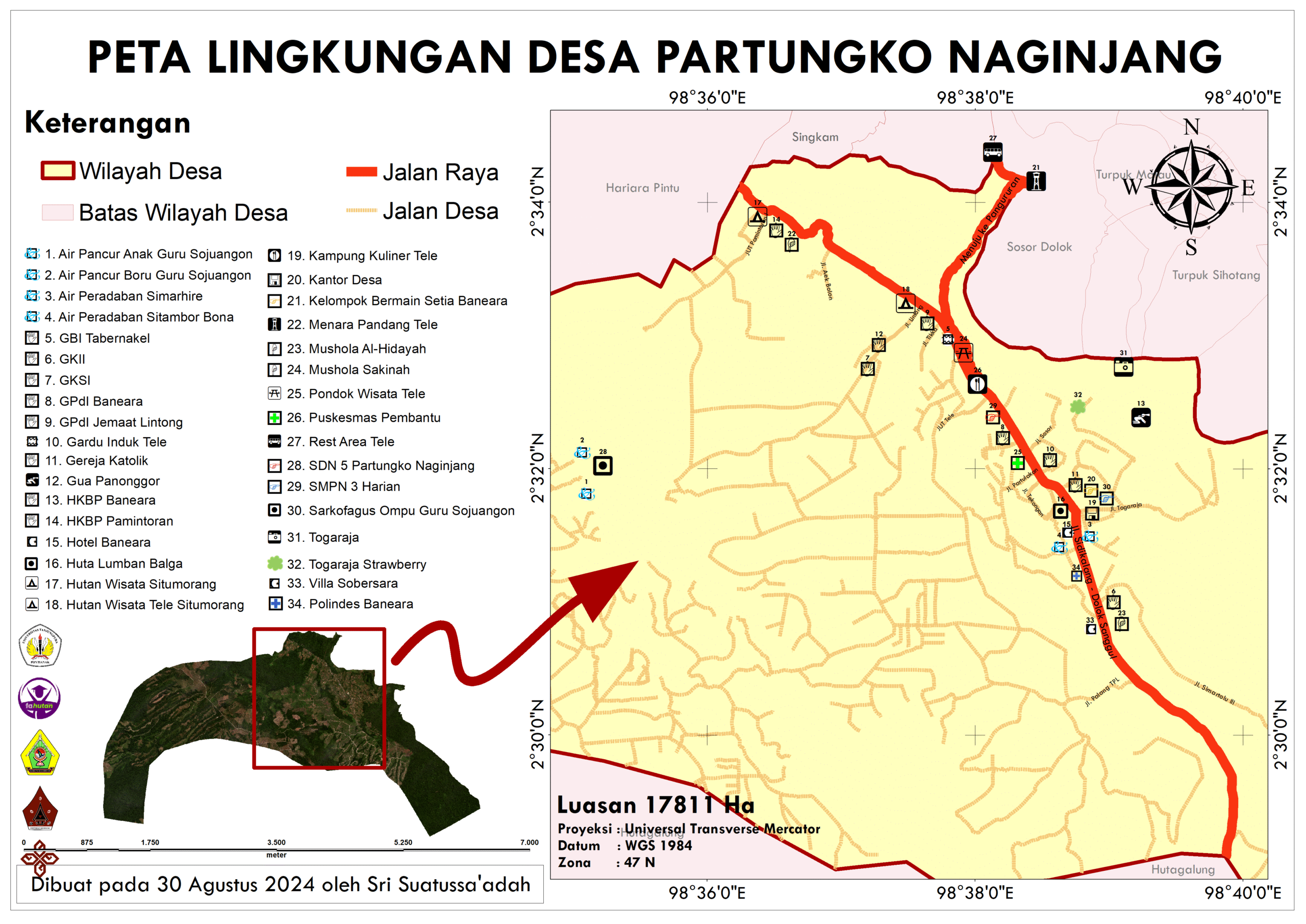
Hidden in the highlands of Harian District, Samosir Regency, North Sumatra, there is a village that combines natural charm, culture, and history in stunning harmony: Partungko Naginjang Tourism Village. It stands on 17.500 hectares of land, not including the forest. Partungko Naginjang Tourism Village is directly bordered by four areas: to the north by Hariarapintu Village, to the east by Sihotang Village, to the south by Hutagalung Village, and to the west by Parlilitan Subdistrict, Humbang Hasundutan Regency.
Hidden in the highlands of Harian District, Samosir Regency, North Sumatra, there is a village that combines natural charm, culture, and history in stunning harmony: Partungko Naginjang Tourism Village. It stands on 17.500 hectares of land, not including the forest. Partungko Naginjang Tourism Village is directly bordered by four areas: to the north by Hariarapintu Village, to the east by Sihotang Village, to the south by Hutagalung Village, and to the west by Parlilitan Subdistrict, Humbang Hasundutan Regency.
VILLAGE HISTORY
PARTUNGKO NAGINJANG VILLAGE
The name Partungko Naginjang is not just a geographical marker, but holds deep meaning from the history and wisdom of the ancestors. It comes from two words in the Batak language: Partungko, which means “gathering,” and Naginjang, which means “high.” This name reflects the village's identity as a gathering place for kings and traditional leaders in the past, a sacred spot in the highlands of Samosir, where they performed rituals to honor their ancestors. The ritual was performed at a special place called Lumban Balga. This is where offerings to the ancestors were placed, with deep respect and spirituality. Lumban Balga is not only a place of ceremony, but also a symbol of the bond between humans, nature, and their predecessors.
Administratively, Partungko Naginjang Village was officially established as a village in Harian Subdistrict, Samosir Regency through Regional Regulation No. 02 of 2011. However, long before that, this area was known as part of the Batak traditional government system called Bius. In 1908, the Dutch colonial government officially recognized the existence of Bius Partungko Naginjang as a social and cultural entity. After the colonial period, this region was merged into one hamlet along with two other hamlets. However, the community's spirit to preserve their identity and ancestral heritage never faded. Finally, on August 1, 2011, this region was divided into three : Tele, Baneara, and Pamintoran, with Partungko Naginjang as an important part of that history.
This village is not just a place; it is a living space that holds the stories, history, and spirit of its people. Visiting Partungko Naginjang is like tracing the footsteps of the past that still echo in today's life.
VISION AND MISSION
PARTUNGKO NAGINJANG VILLAGE
"To realize the independence of Partungko Naginjang Village as a technology-based agricultural sector and to create a prosperous community."
"To realize the independence of Partungko Naginjang Village as a technology-based agricultural sector and to create a prosperous community."
The independence of Partungko Naginjang Village as an agricultural sector means that the community of Partungko Naginjang Village is able to achieve a decent standard of living that is on par with other more advanced villages in terms of agriculture.
Technology-based means that the process of agricultural land cultivation will utilize current agricultural technology, optimizing discussions in the Village Development Planning Meeting (Musrembang) to add Village-Owned Enterprises (BUMDes) in the field of agricultural tools.
Moving towards a prosperous community means that with the independence of Partungko Naginjang Village in the agricultural sector and with the support of technology, the community's income will improve so that in the future, the residents of Partungko Naginjang Village will be able to move towards a prosperous community.